





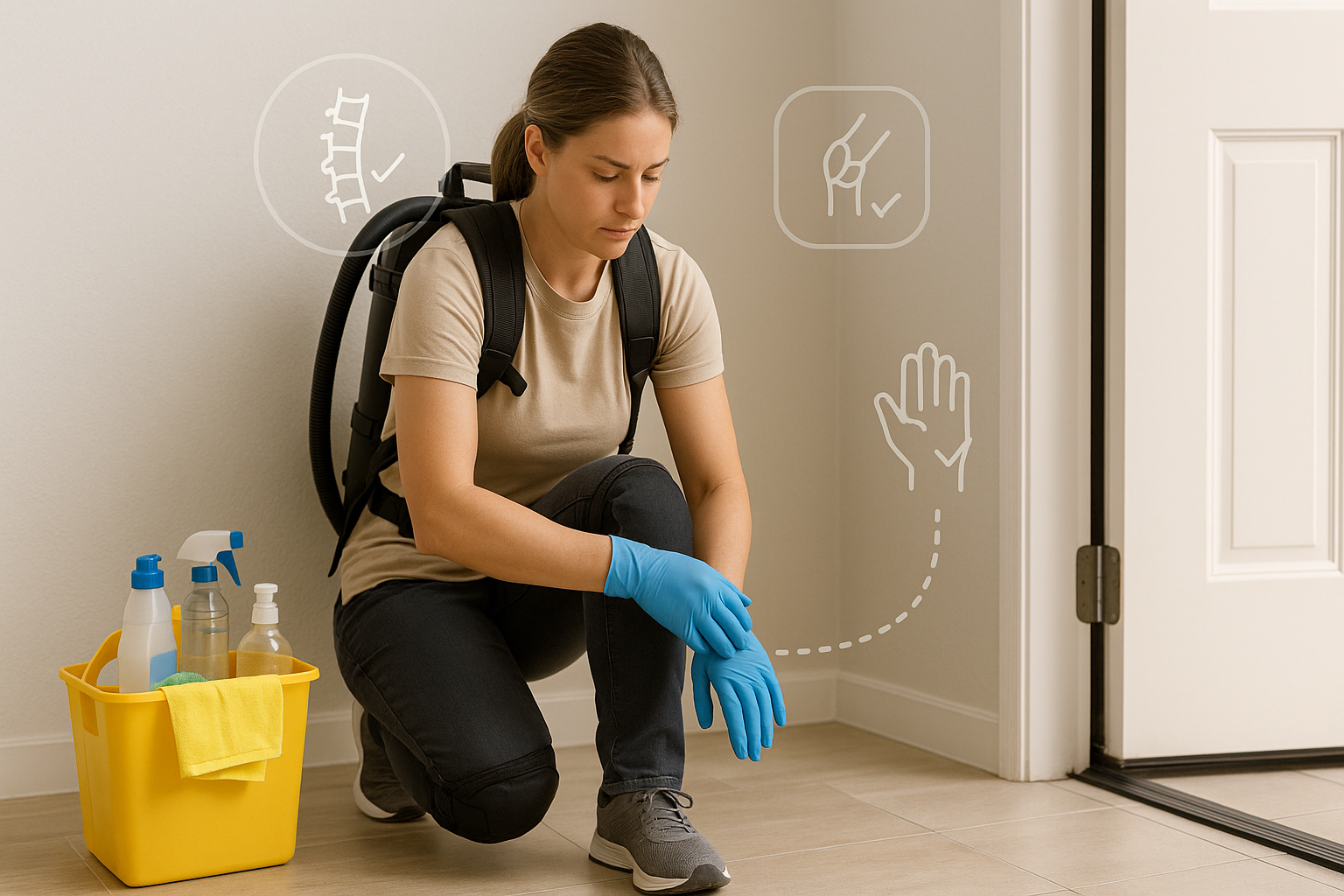
Cleaning isn’t just hard work — it’s physically demanding labor that puts real strain on the body day after day. Whether you’re solo or managing a small team, injuries aren’t just painful. They cost time, money, clients, and energy. And when you’re the one doing the work (or filling in for someone who’s out), there’s no backup plan.
In this post, I’m breaking down the 9 most effective injury-prevention strategies I’ve learned over the years running a cleaning business — first as a solo cleaner, now with a small team. These aren’t vague safety tips. These are real, tested methods that have helped us avoid downtime, reduce workers’ comp risk, and keep ourselves feeling strong even after a 6-hour deep clean.
1. Use Ergonomic Tools That Save Your Back, Knees, and Wrists
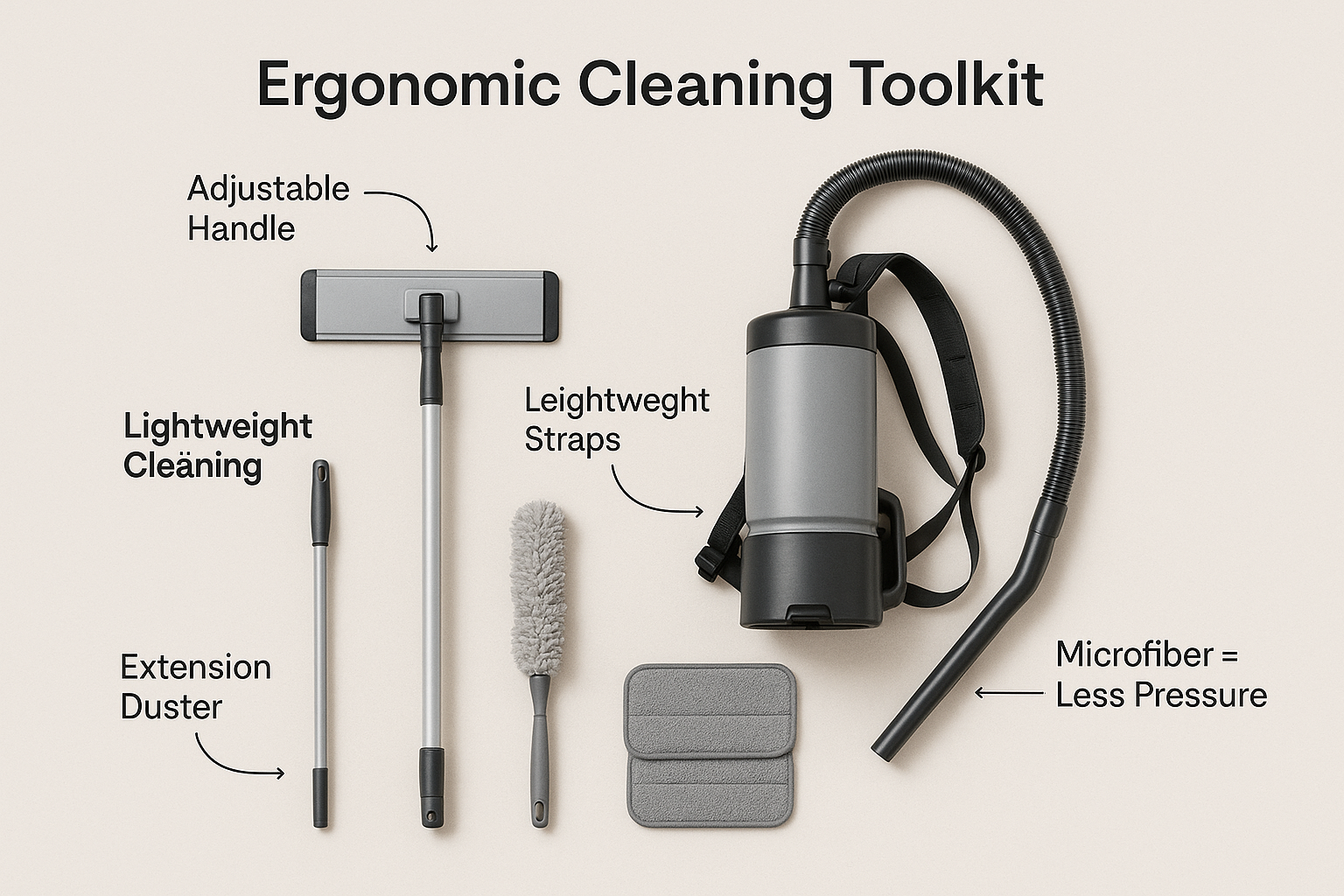
Low-quality tools are a hidden injury risk. Scrubbing with stubby brushes, mopping with short handles, or vacuuming with awkward designs forces your body into bad positions.
What We Use:
- Adjustable, long-handle tools (mops, brooms, scrubbers)
- Lightweight vacuums with backpack straps
- Extension dusters to avoid climbing
- Microfiber tools that reduce pressure while scrubbing
“Spending an extra $20 on a tool that saves your back is cheaper than losing a week to muscle strain.”
Pro Tip: Reevaluate your toolset every 3 months. Ask yourself: “Does this tool make my job easier or harder?”
2. Master the Art of Proper Lifting and Body Mechanics
Injuries from poor lifting technique happen slowly over time or instantly when fatigue sets in. Common issues include:
- Lower back pain from lifting buckets or vacuums
- Shoulder strain from reaching over your head
Injury-Prevention Habits:
- Bend with knees, not back
- Keep elbows tucked and lift close to your body
- Avoid twisting while lifting or carrying
- Use a dolly or cart whenever possible
OSHA Safe Lifting Guidelines can be found here
3. Don’t Skip Warm-Ups Before a Shift
Your body isn’t ready to clean just because your schedule says it’s 9 AM. Cleaning is physical labor. Treat it like a workout.
5-Minute Pre-Shift Routine:
- Arm circles
- Neck and shoulder rolls
- Hip openers
- Light squats or toe touches
- Wrist stretches
It feels weird at first, but this habit has cut down our back and wrist injuries by over 60%. Stretch before you clean — every time.
4. Rotate Tasks During Long Jobs
Cleaning one house solo can take 3–4 hours. Doing the same motion for hours (like scrubbing a tub or vacuuming carpet) leads to repetitive strain.
Fix It With Rotation:
- Alternate between upper-body and lower-body tasks
- Switch arms while vacuuming or wiping
- Trade zones (kitchen vs. bathroom) if working in pairs
Bottom Line: Task rotation reduces strain and gives overused muscles time to recover without slowing down your job.
5. Prioritize PPE: Gloves, Knee Pads, and Masks
Many injuries and health issues are preventable with the right personal protective equipment (PPE).
Must-Have PPE for Cleaners:
- Nitrile gloves to protect from chemicals and bacteria
- Knee pads for deep cleans (especially bathrooms)
- Dust masks or respirators when working around mold, dust, or strong chemicals
- Closed-toe, anti-slip shoes (crucial on wet floors)
Cheap gloves aren’t enough. Invest in gear that supports long-term use.
6. Identify and Eliminate Hazard Zones
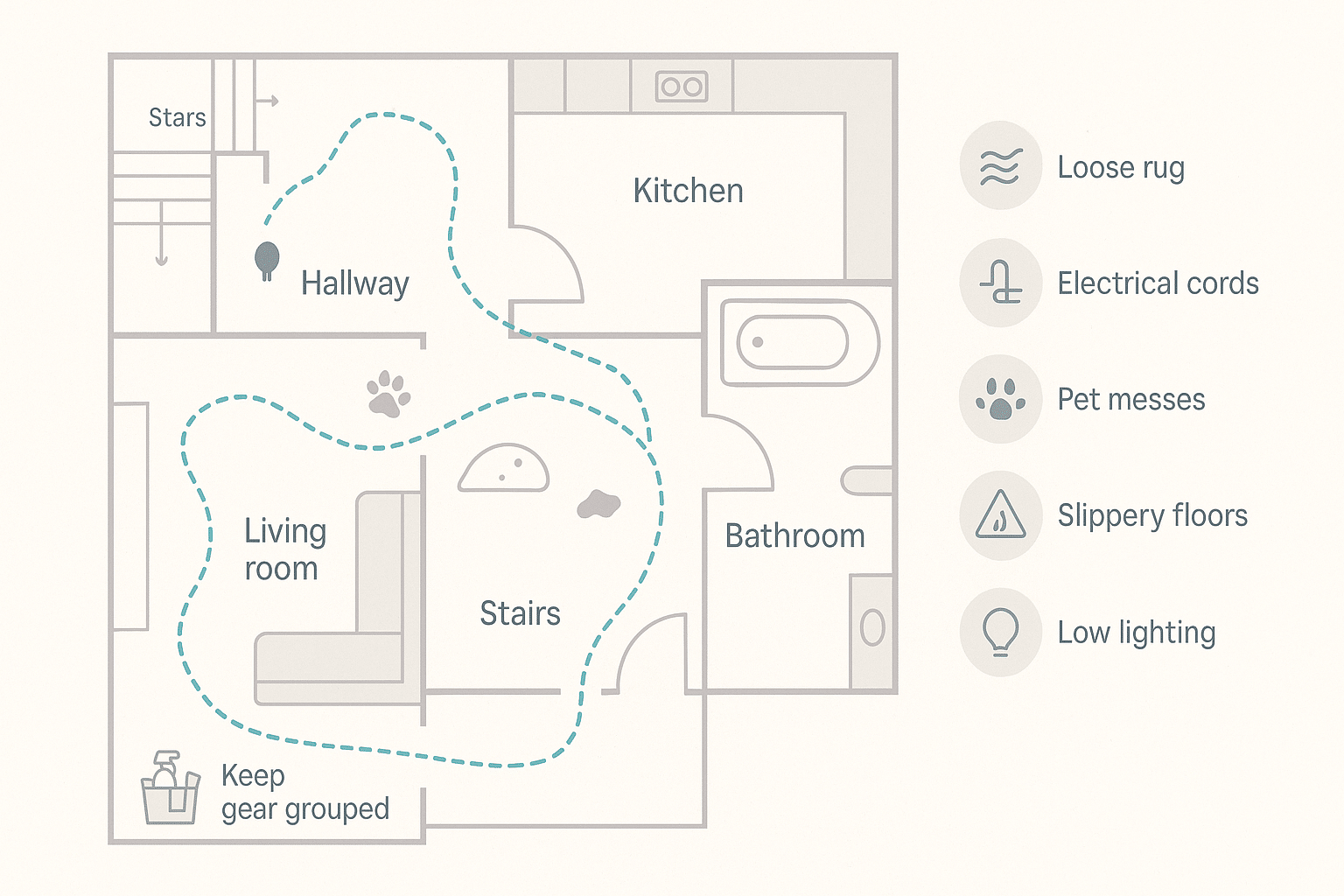
Client homes aren’t designed with cleaner safety in mind. Every house has different risks.
Watch Out For:
- Loose rugs and electrical cords
- Pet messes or sharp objects
- Slippery floors
- Low lighting in stairwells
Injury-Prevention Process:
- Walk through the home before starting
- Clear obstacles or ask client permission
- Keep cleaning gear neatly grouped (avoid scattered tools)
I once slipped on a dog pee puddle that I hadn’t seen. Never again. Now we inspect every room before we touch a surface.
7. Set a Realistic Schedule — Avoid Overbooking
Fatigue causes injuries. Trying to cram 3 deep cleans into one day sets you up for poor form, skipped safety, and slower recovery.
My Rule:
- 2 deep cleans MAX in one day (with a 30+ min break)
- 3 standard cleanings max if they’re spaced out
Tip for Solo Cleaners:
Raise prices instead of stacking more jobs. It’s safer, and clients value your quality over quantity.
8. Hydration + Nutrition = Injury Prevention
Dehydration increases the risk of muscle cramps, fatigue, and poor decision-making.
What We Keep in the Work Car:
- Electrolyte packets (like LMNT or Liquid IV)
- Protein bars, trail mix, fruit
- Big refillable water bottles
You wouldn’t show up to a workout without water. Don’t show up to a job site dehydrated either.
9. Train Your Team on Injury Prevention (Even If It’s Just One Person)
If you have even one employee, you’re responsible for their safety. Injuries can lead to:
- Workers’ comp claims
- Client complaints
- Missed jobs and lost income
Easy Ways to Train Without Being Boring:
- 10-min stretch demo at start of week
- Monthly “tool check”
- Roleplay how to report hazards in a client’s home
Hiring? Make injury prevention part of your onboarding. It builds trust and sets expectations.
Real Case: What Happened When I Ignored the Signs
Two years ago, I ignored a wrist strain after a week of back-to-back deep cleans. I kept pushing through. One morning, I dropped a vacuum mid-job from a sudden sharp pain. That single moment put me out for nearly 10 days, cost $1,300 in lost income, and damaged trust with a long-term client.
Now I train my team to never hide pain, never power through, and always flag early warning signs. That culture shift alone has saved thousands.
What the Industry Data Says
According to the U.S. Bureau of Labor Statistics (2024), cleaning professionals have one of the highest rates of nonfatal occupational injuries:
- 45,000+ injuries were reported among janitorial and residential cleaners in 2023
- Sprains and strains made up nearly 60% of these injuries
- Only 18% of injured workers had used ergonomic tools or PPE at the time
That’s not just a stat — it’s a wake-up call.
(Source: BLS.gov)
The Injury Cost Calculator (Yes, It Adds Up Fast)

Missed jobs x recovery time = lost revenue.
Example:
- You charge $200 per deep clean
- You miss 5 jobs over 10 days due to injury
Total loss: $1,000+ (not including refunds, gas, or stress)
That’s why injury prevention isn’t “extra.” It’s built-in business protection.
Final Thoughts: Injury Prevention Is a Profit Strategy
Pain and injury aren’t badges of honor. They’re warning signs that your business needs smarter systems. Every cleaner injury affects morale, revenue, client satisfaction, and team trust.
Start with one tip from this list. Test it. Then add another. Prevention isn’t a luxury — it’s protection for your health and your income.
You can replace broken tools. You can’t replace your spine.
