






When I moved from solo cleaner to managing a small team, I thought growth would get easier.
Instead, I lost visibility.
When you’re the one cleaning, you know the quality. When you have 3–10 employees, you rely on systems. And without structured feedback, you are guessing.
Client feedback forms became the tool that gave me back control without micromanaging my team.
If you manage a small cleaning team and want consistent quality, stronger reviews, better retention, and scalable growth, this is how you use feedback strategically.
1. Replace Guesswork With Measurable Service Quality
When you’re not inside every home, quality becomes perception-based unless measured.
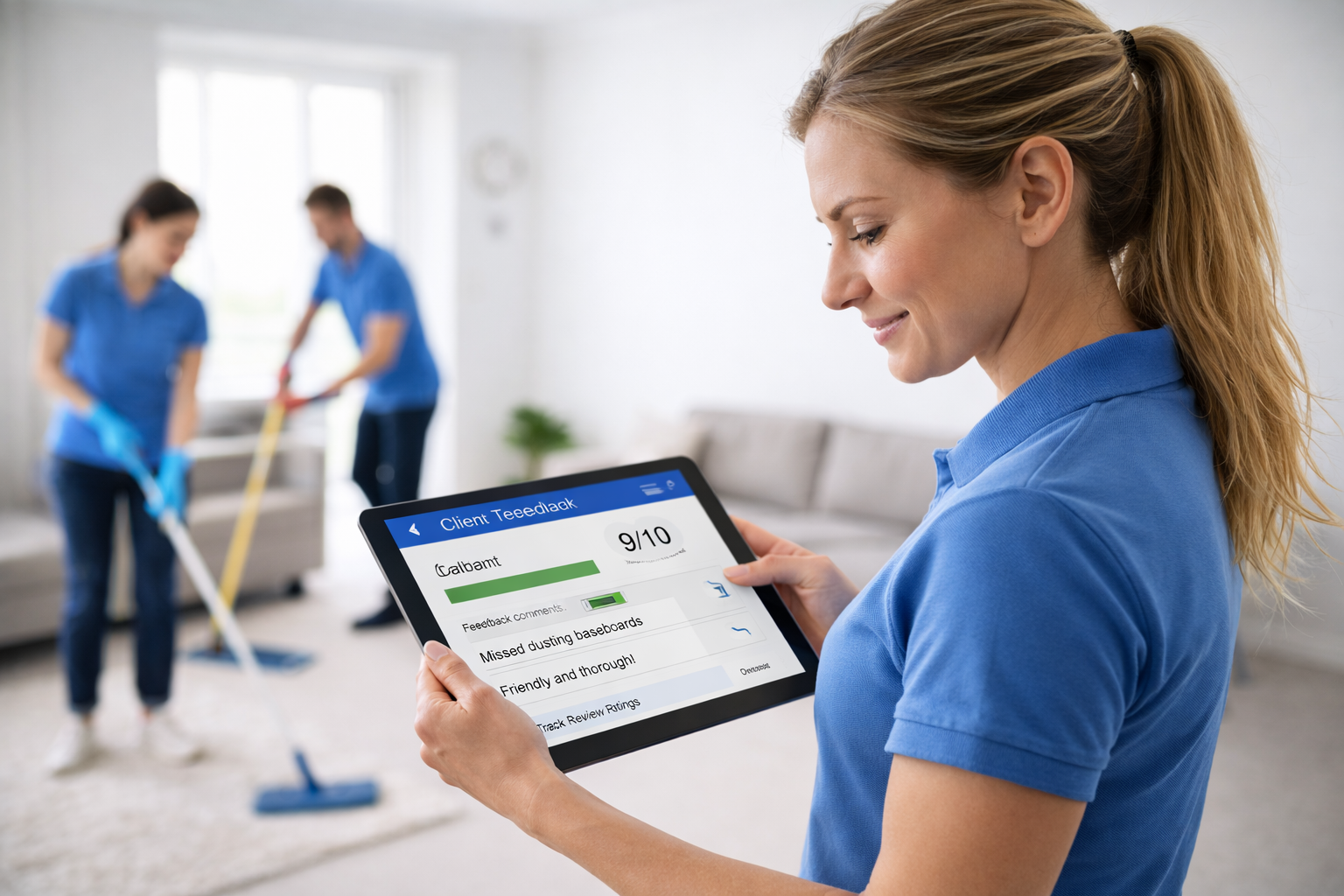
A simple post-clean feedback form gives you:
- Satisfaction rating (1–10 scale)
- Specific missed areas
- Professionalism rating
- Likelihood to recommend
According to the 2024 BrightLocal Consumer Review Survey, 87 percent of consumers used Google to evaluate local businesses in the past year. For home services, consistent positive sentiment drives bookings.
If you don’t measure satisfaction consistently, negative experiences go unnoticed until cancellation or a public review.
A 10-question feedback form sent after recurring cleans creates measurable quality control without hovering over employees.
2. Spot Training Gaps Before They Become Reputation Problems
When feedback repeats phrases like:
- “Corners were dusty”
- “Floors felt rushed”
- “Bathrooms were good but not detailed”
- “Team was polite but quick”
You are seeing training signals.
Instead of general team meetings about “doing better,” you can address specific standards:
How to Use This Data
- Track recurring comments monthly
- Tie comments to team leads
- Adjust your checklists
- Add refresher training videos
- Role-play client expectations
Zendesk’s 2024 Customer Experience Report shows 73 percent of customers will leave after multiple poor experiences. Small issues compound quickly.
Feedback forms prevent silent decline.
3. Increase Accountability Without Micromanagement

Small team owners often struggle with this balance:
You want high standards.
You don’t want to hover.
Feedback creates objective accountability.
Instead of saying, “I feel like quality dropped,” you say:
“Three clients mentioned missed baseboards this month. Let’s walk through our detailing process.”
The conversation becomes data-driven.
This reduces defensiveness and improves buy-in.
Employees respond better to clear, documented trends than emotional corrections.
4. Identify Your Top Performers With Real Evidence
Feedback forms reveal patterns in team performance.
Track:
- Satisfaction score by team
- Compliments by cleaner name
- Repeat client requests
- Referral mentions
When one team consistently scores 9–10 and receives detailed praise, you’ve identified leadership potential.
Rewarding based on real feedback increases retention.
The U.S. Bureau of Labor Statistics reported ongoing labor shortages in service industries through 2024. Retaining strong cleaners protects growth and reduces hiring costs.
Recognition backed by client data motivates your team and stabilizes operations.
5. Turn Positive Feedback Into High-Converting Reviews

Most satisfied clients never leave reviews unless prompted.
Add this question to your form:
“Would you be willing to share this feedback publicly?”
If they answer yes, send a direct link to your Google Business profile.
BrightLocal reports that 98 percent of consumers read online reviews for local businesses in 2024.
Cleaning is a trust-based service. Reviews directly affect conversion rates.
You’re already earning praise. Capture it.
6. Use Feedback to Refine Pricing Strategy
If your satisfaction averages 9 or 10 consistently and comments highlight reliability, thoroughness, and professionalism, your pricing may be below market value.
In 2024 and 2025:
- Insurance costs increased
- Supply costs increased
- Labor wages increased
- Fuel costs fluctuated upward in many regions
If clients consistently praise value, not price, you have leverage.
When raising prices:
- Reference improved systems
- Highlight consistency
- Communicate training investments
- Emphasize reliability
Strong feedback provides confidence.
Businesses that use customer insight data to guide strategy see revenue growth of 10–15 percent, according to McKinsey’s 2024 personalization research.
7. Reduce Cancellations and Churn
Clients rarely cancel without warning signs.
Common warning signals in feedback:
- “Good, but rushed.”
- “Not as detailed as last time.”
- “Different team energy.”
- Lower satisfaction scores.
When you see scores drop from 9 to 7 over two visits, intervene immediately.
Call the client.
Thank them.
Ask for clarification.
Fix it on the next visit.
Retention improves when clients feel heard.
Acquiring a new customer costs significantly more than retaining an existing one. Industry marketing research consistently shows retention is more profitable than acquisition.
For small teams, stable recurring revenue allows predictable scheduling and hiring.
8. Improve Communication Standards Across the Team
Feedback often reflects communication gaps, not cleaning quality.
Examples:
- “They arrived early without notice.”
- “Didn’t know they were bringing a new team member.”
- “Didn’t confirm appointment.”
Add communication-related questions to your form:
- Was arrival timing communicated clearly?
- Did the team introduce themselves?
- Did we confirm your expectations before starting?
Standardizing communication improves perceived professionalism immediately.
That perception increases referrals.
9. Build a Scalable System Instead of Depending on You
The biggest shift from solo operator to small team owner is system reliance.
Feedback forms create:
- Measurable quality control
- Team accountability
- Data-backed training
- Review generation
- Retention monitoring
- Pricing validation
That system works whether you clean one home or fifty per week.
How to Implement Simply
Use:
- Google Forms
- Jobber automated follow-ups
- Housecall Pro surveys
- Simple email templates
Keep it under 10 questions.
Send within 24 hours of service.
Review weekly.
Share trends monthly with your team.
Consistency is more powerful than complexity.
What to Include in Your Client Feedback Form
Here’s a simple structure:
- Overall satisfaction (1–10)
- Cleanliness rating
- Professionalism rating
- Communication rating
- Missed areas (open text)
- What stood out positively?
- Would you recommend us?
- Permission to share publicly?
Avoid long forms. Completion rates drop with length.
2025 Trends That Make Feedback More Critical Than Ever
Home service competition increased across many markets in 2024 and 2025.
Consumers now:
- Compare multiple companies online
- Read at least 5–10 reviews before booking
- Expect fast responses
- Expect consistency
Trust drives booking decisions.
Client feedback directly strengthens:
- Online reviews
- Service refinement
- Team accountability
- Brand reputation
Without feedback, you operate reactively.
With feedback, you operate strategically.
