






Hiring your first few cleaners feels like a win—until you realize you’re working double. You’re answering questions all day, fixing mistakes, and re-cleaning jobs just to keep clients happy. It almost makes you want to go back to doing it solo.
But the truth is: you can’t grow if you’re stuck hand-holding every new hire. The key is building a training system that works without you at every job. I’ve gone from cleaning alone to running a small team of reliable cleaners who can handle jobs on their own—without daily check-ins.
Here are real-world strategies I used (and still use) to train new cleaners fast, without sacrificing quality or burning myself out.
Create a Day-One Training Checklist
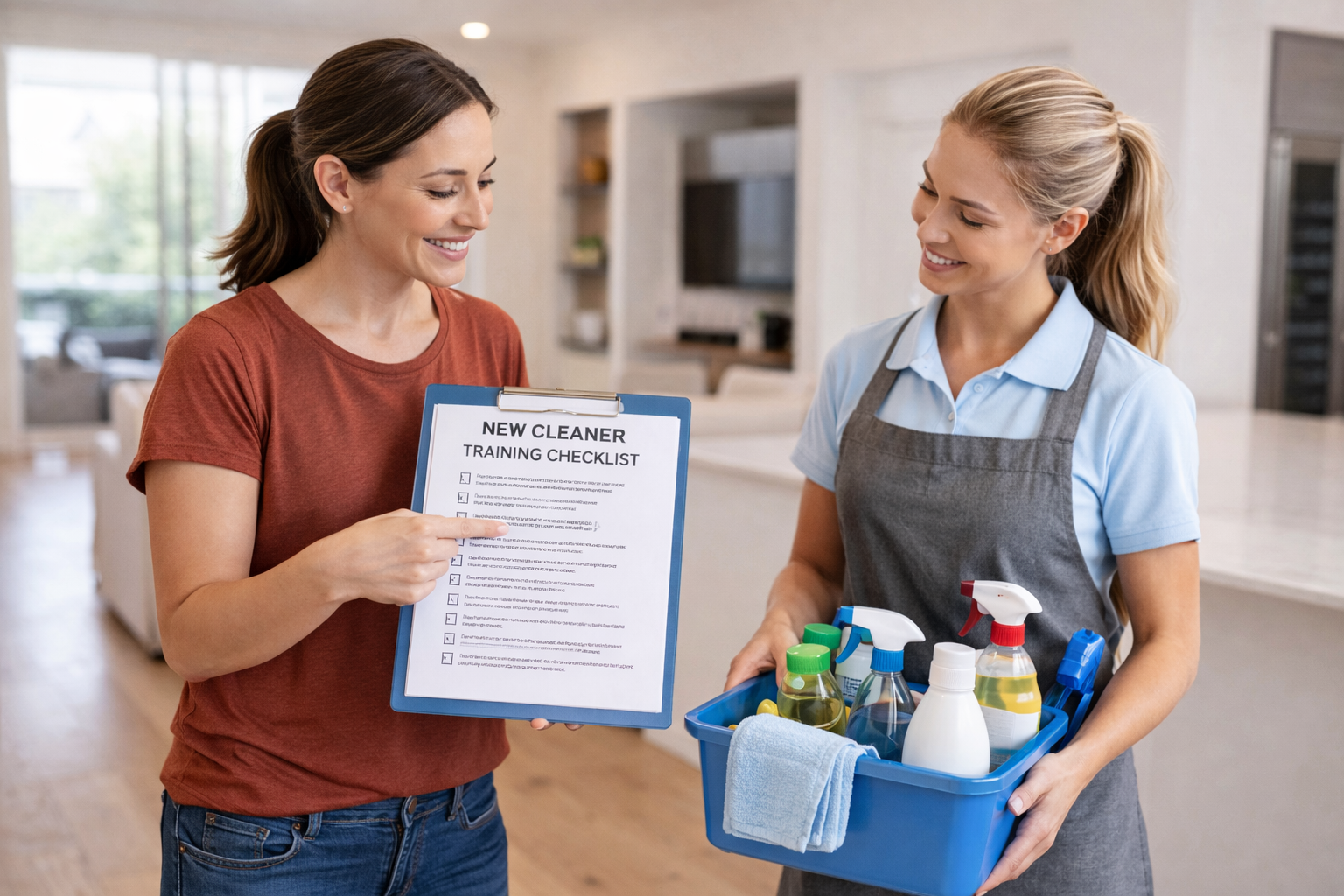
New hires need structure to thrive. One of the first things I implemented was a simple, clear training checklist for their first day. It sets expectations, outlines basic procedures, and builds confidence from the start. On day one, they learn our company policies, safety protocols for things like chemicals or alarms, and how our supplies are organized. We also go over the plan for who they’ll shadow and for how long.
I print this checklist, laminate it, and hand it to every new hire. It keeps things consistent and saves me from repeating myself endlessly.
Use Cleaning Checklists for Every Job Type
Even experienced cleaners won’t automatically know how you want things done. I learned early on that assuming leads to callbacks. That’s why I created room-by-room checklists tailored to each job type—whether it’s an Airbnb, a deep clean, or a standard recurring service.
Instead of guessing, they follow step-by-step instructions:
- In kitchens, degrease the stove, wipe fridge handles, and scrub the sink.
- In bathrooms, shine faucets, check behind the toilet, and fold towels neatly.
- Etc
Record Training Videos During Real Jobs
When I couldn’t keep answering the same questions again and again, I started filming myself while I cleaned. I explained what I was doing and why as I worked, then uploaded those videos to a private YouTube playlist.
No fancy gear—just my phone and a tripod. Each video focused on a single topic and stayed under 10 minutes. That way, new hires can rewatch whenever they need a refresher.
Training videos allow new team members to learn at their own pace and keep your systems consistent across hires.
Assign a Shadow Week
Early on, I made the mistake of putting new cleaners on solo jobs by day three. That never worked. What finally made a difference was implementing a structured shadow week.
I set it up like this:
- First two days: Watch and ask questions
- Midweek: Assist and practice under supervision
- End of week: Clean independently while being evaluated
It’s not about perfection—it’s about catching mistakes early, building confidence, and gradually stepping back.
Standardize Your Supplies and Setup
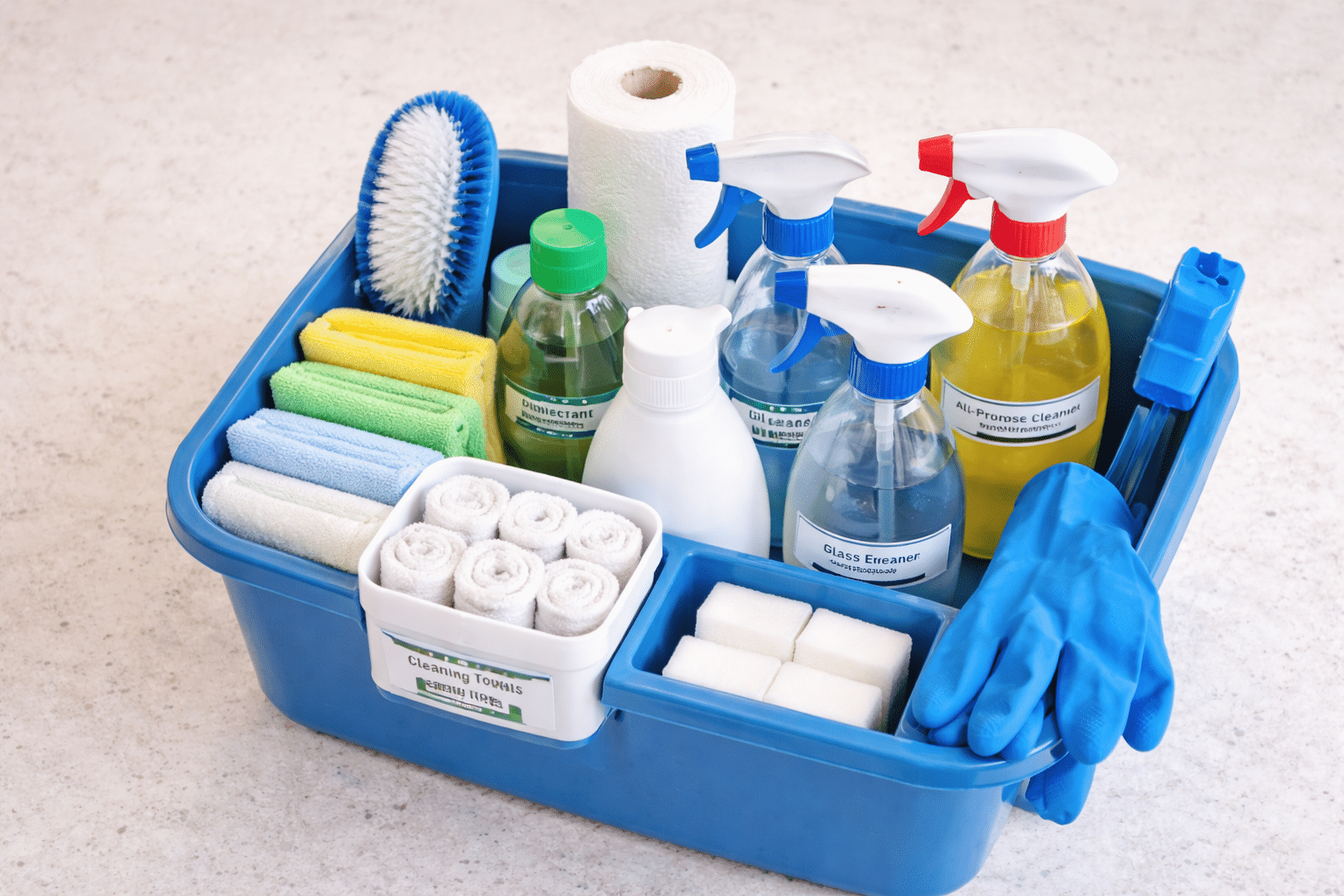
Your cleaners will only be as consistent as the tools you give them. When I first started hiring, everyone had their own spray bottles and brands—which led to uneven results.
Now, I standardize everything: one brand of disinfectant, the same model vacuum and mop, and identical cleaning caddies for everyone. I even take a photo of the correct setup and include it in onboarding.
This helps new cleaners get up to speed faster and prevents confusion across jobs.
Prepare a Problem-Solving Guide
Things will go wrong. The client won’t answer the door. A pet might escape. Something breaks. The question is: will your cleaner know what to do?
Rather than waiting for the frantic call, I created a one-page cheat sheet that walks through the most common scenarios and how to handle them. It includes situations like:
- Client not home
- Job finishes early
- Supplies missing
Training them on these “what-if” moments in advance helps them make better decisions on-site and gives you fewer panicked texts.
Use Group Chat Wisely
Group chats like WhatsApp are great for team culture, quick updates, and reminders. But if every question runs through you, the whole system collapses.
I set boundaries early. Training materials come first. If the answer isn’t in the checklist or video, then they can ask in chat. This builds independence and keeps my phone from blowing up all day.
The group chat is a tool, not a crutch.
Run Weekly Quality Checks

Even with great systems, accountability matters. I do random spot checks on jobs or casually follow up with clients for feedback.
When I find great work, I highlight it in the team chat. If there’s a mistake, I handle it privately and use it to update future training. This keeps everyone growing without micromanaging.
Set a Clear Trial Period
Some people won’t make it, and that’s okay. I let new hires know they’re on a two-week trial with specific pass/fail expectations.
They need to:
- Show up on time
- Follow checklists without reminders
- Accept feedback without resistance
It removes the stress of keeping the wrong person too long. If they’re not a fit, we both move on.
Add an End-of-Week Recap Routine
At the end of each week, I do a 10-minute review with new hires. Nothing formal. We talk through what went well, what felt confusing, and where they think they need help.
This gives them a voice in the process and gives me insight into how they’re adjusting. More importantly, it sets the tone that feedback is normal and ongoing—not just something that happens when there’s a mistake.
I use this time to spot red flags, coach them up, and catch any gaps in my training materials.
Encourage Peer-to-Peer Training
One thing that saved me time was letting my senior cleaners step into trainer roles. Once someone had proven they could follow systems consistently, I asked them to help with onboarding.
It did two things: it boosted their confidence and freed me up to focus on growth. I also gave them a checklist to guide their shadow week, so it stayed consistent.
Having a peer explain why we fold towels a certain way or how we greet clients sometimes lands better than hearing it from the boss.
Create a Digital Training Hub
Once your training assets start piling up—videos, checklists, cheat sheets—house them in one easy-to-access spot. I use a simple Google Drive folder with clearly labeled subfolders.
- “Day 1 Checklist”
- “Cleaning by Room”
- “Problem Scenarios”
- “Video Tutorials”
You can link this in your hiring emails or even as a QR code on printed training docs.
When a cleaner forgets a step or needs help, the answer is always there—without pinging you every time.
Final Thoughts: Training Systems Set You Free
Training doesn’t need to be chaotic or exhausting. Once I built repeatable systems like checklists, video tutorials, and a shadowing plan, I finally got my time and sanity back.
You don’t need a big team or fancy software to pull this off. Just document what already works, build habits around it, and hold your team accountable.
If you’re tired of babysitting every job, this is your way out.
